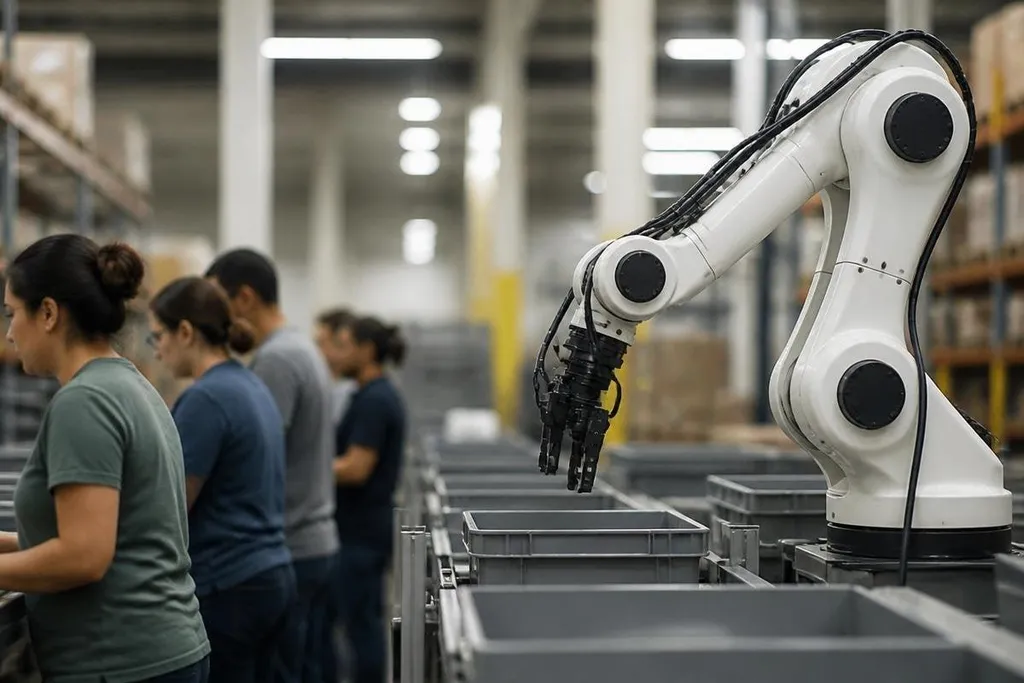
A workplace robot can sort tasks, score applicants, watch output, or set a worker’s pace. If the rules behind those actions reflect old bias, the machine can apply them across a whole workforce with little room for review.
- The risk starts with the data: past decisions can become machine rules.
- Speed can hide harm: a system may affect many workers before anyone checks it.
- A human review step matters: workers need a clear way to question a decision.
Where the bias enters
The robot itself doesn't decide who deserves a job or a better shift. People choose the data, goals, sensors, and rules that guide it. Those choices can carry unfair patterns into an automated system.
A hiring tool may score an applicant through past job records, test results, speech, facial movement, or work history.
A scheduling system may use attendance records and output targets. If earlier managers gave fewer chances to a certain group, the system may read that history as proof of lower ability.
The same issue can appear on a factory floor. A camera may track how long a worker takes to finish a task, while a mobile robot records delays around a work area. That data says what happened at one moment. It may not explain whether a tool failed, a route was blocked, or a worker needed a safe pause.
Why robots can spread the problem
A person may make a biased choice that affects one applicant or one shift. Software can repeat a rule across every case it handles. A robot may also produce a score that looks precise, even when the input leaves out important facts.
That speed changes the size of the risk. Workers may receive fewer shifts, lower scores, or more checks before they know which rule caused the result. Managers may also accept the output because it came from a machine, then miss the human choice built into the design.
For a worker facing a disputed schedule or score, the useful record names the robot’s task, training data, and review process. Reporting on workplace robotics can connect those details to the people affected before the discussion turns to what the robot can physically sense and do.
Physical robots have limits too
A robot that moves through a workplace can affect people without making hiring decisions. Its route may work well for workers who move in a certain way, while creating extra effort for someone with a disability or a different body size.
Safety settings can raise similar questions. A system may slow down near a person, stop when a sensor sees movement, or restrict access to a work area. Those controls protect workers, but a poor setup can give some people less access to tools or productive tasks.
The fix starts with testing the whole task, not only the machine. A company needs to check who gets assigned work, who gets stopped, whose movements the sensors read poorly, and who can ask for a manual review.
What a company should check before deployment
A short review before purchase can expose risks that a sales demo will miss. Ask for written answers, test results, and a named person who owns each decision.
- Name the decision: record whether the system affects hiring, pay, shifts, output scores, access, or safety stops.
- Check the input: list every data source, sensor, and worker detail used by the system.
- Test different workers: run the same task across varied body sizes, movement patterns, accents, and work speeds.
- Set a review path: give workers a way to challenge a score or task decision without asking the robot’s operator.
- Keep records: save the rule version, decision reason, human override, and outcome for later checks.
- Set a stop rule: pause the system when results show a repeated burden on one group.
The question that follows the purchase
A company should ask who gains time from the robot and who carries the new risk. That answer may change after a software update, a new sensor, or a change in work targets.
I'd reject any workplace robot that cannot show how it makes decisions and how a worker can challenge them. A machine can help with a task, but the company still owns the result. The next test is not whether the robot works in a demo; it's whether people can see, question, and correct its decisions on the job.